

 ไทย
ไทย
 Tiếng Việt
 Google


![Bangkok Pride Forum 2026 [RERUN] Zipevent](https://cdnali.zipeventapp.com/images/events/D8370764-280D-4D98-8D82-21A0E21AF973/F6C74D42-7A79-4FE0-BF84-30D67833FCBD.jpg "Bangkok Pride Forum 2026 [RERUN]")













|
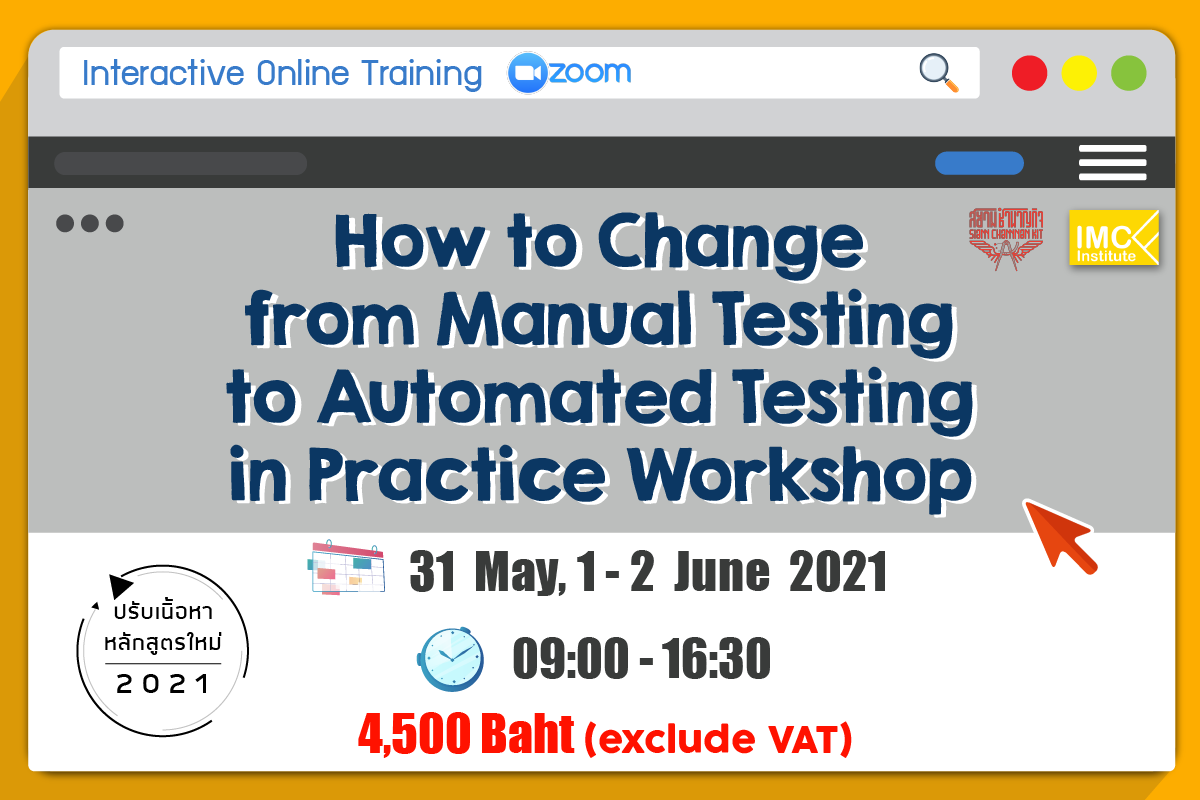
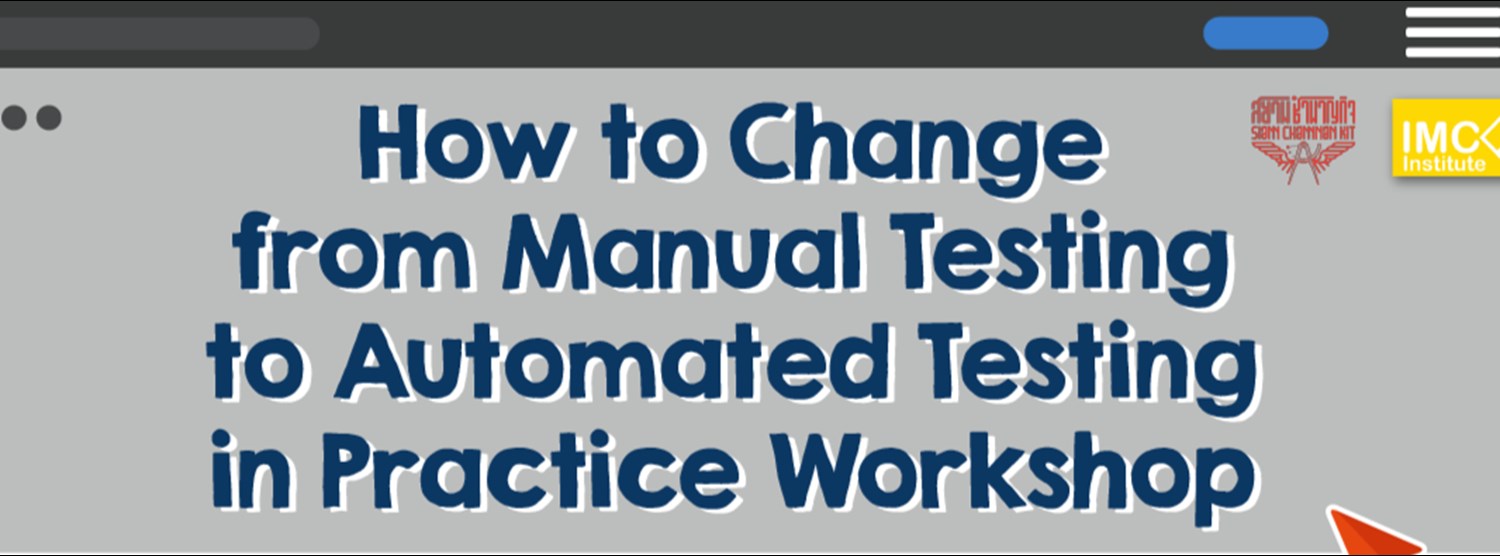
In the cycle of software development sequence phases in example waterfall models, testing is the phase nearly end of the cycle that takes too long time to get the testing results and use too much effort of software tester or who take responsibilities to perform test execution. Automated testing has been introduced to reduce the effort and reduce time to get the test results but in practice it does not get them because the execution of automated testing happened in the last as same as manual testing. To change from manual testing to automated testing needs the goal, strategy, implementation plan, change management and measurement of the return on investment (ROI).
In two days of workshop, the participants will learn and gain experience from real-life project based learning that gives participants an opportunity to put all the puzzle pieces together and practice what they have learned. Participants will leave with practical knowledge, skills, techniques and shared real-life case studies how to change from the manual testing to automated testing. In the end the participants will get the answer that automated testing is not only software testers responsibility but it’s responsibility of everybody in the organization.
Workshop Outline:
Each module includes small group exercises and discussions in addition to the major exercises listed based on the project-based learning.
Module 1: The problem of developing, testing and release software
Module 2: The foundation of software testing
Module 3: Anatomy of the automated testing
Module 4: From manual testing to automated testing strategy, implementation plan and change management
Instructor:
Siam Chamnankit team members
Who Must and Should Attend
Must
Should
Prerequisite
Benefits
Software and Equipments
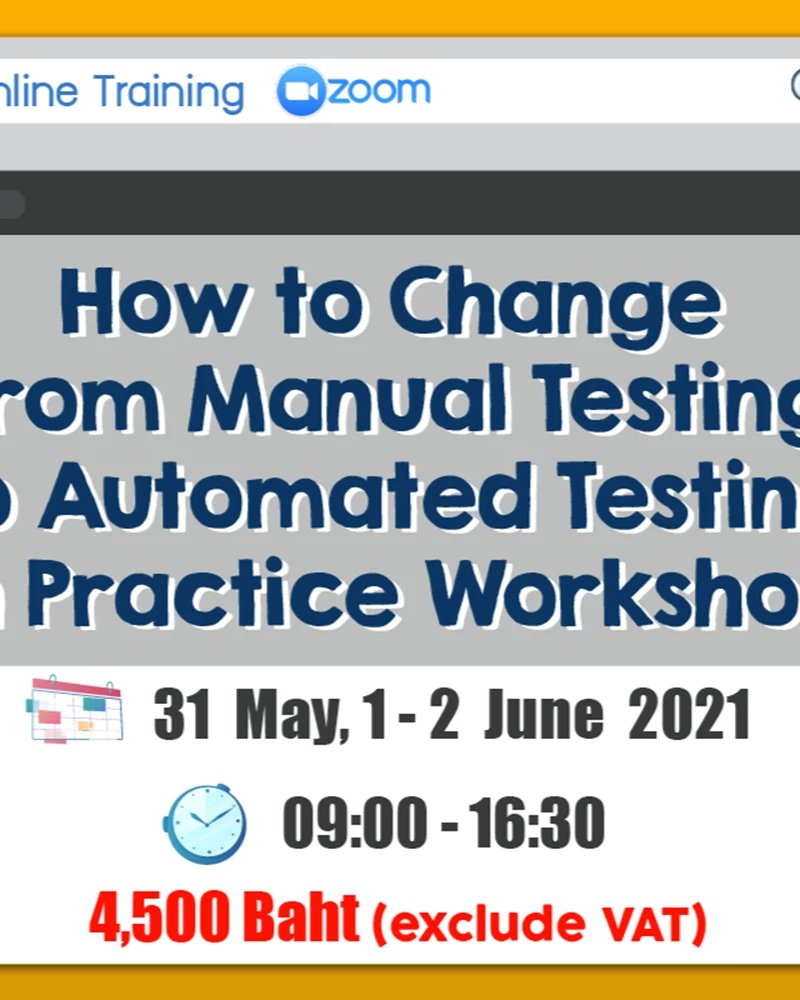
Duration: 3 Days (9:00 - 16:30)
Training Schedule
Fee: 4,500 Baht exclude VAT
รับจำกัดที่ 30 ท่านต่อคลาส และขอสงวนสิทธิ์สำหรับผู้ที่ลงทะเบียนก่อนเท่านั้น
> > เครื่องมือที่ใช้ในการเรียน : ZOOM
> > คู่มือการใช้งาน Zoom เบื้องต้น: >> ที่นี่
> > ท่านจะเข้าใจบทเรียนมากขึ้นด้วย AnyDesk เป็นอีกหนึ่งเครื่องมือที่นำมาใช้ในครั้งนี้พร้อมทีม TA ที่มากด้วยประสบการณ์ของ IMC จะค่อยสนับสนุนระหว่างการเรียนของท่านตลอดหลักสูตร
IMC Institute